

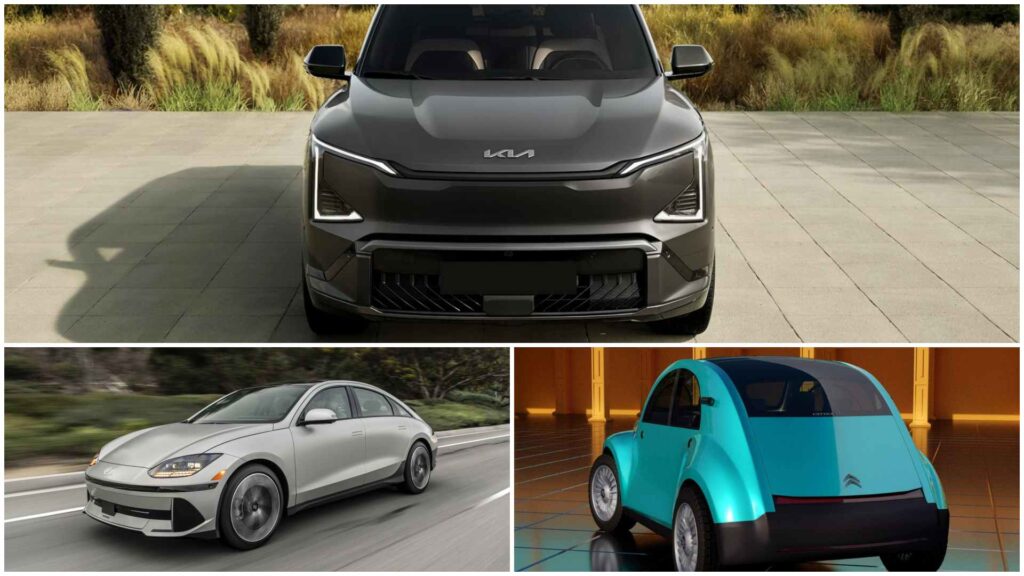
Australia’s EV market is shifting rapidly, with Chinese brands now leading sales and Korean makers consolidating ground through disciplined rollouts. Hosts David Brown and Paul Murrell examine how pricing, supply and consumer confidence are reshaping the industry, while debating subsidies, public transport planning and the future of urban travel. The episode also looks back at a reborn Citroën 2CV EV concept, reviews the Kia Tasman ute and discusses driver-assistance frustrations.
Episode breakdown: Chinese EV dominance in Australia — 00:00:55; Fuel uncertainty driving EV sales — 00:09:50; Chinese government subsidies explained — 00:13:26; Victoria’s bus and transport funding — 00:18:01; Driver frustration with in-car tech — 00:27:14; Reborn Citroën 2CV EV discussed — 00:35:01; Kia Tasman ute road test — 00:41:51.
Chinese EV dominance in Australia
David and Paul discuss how Chinese manufacturers now account for more than half of Australia’s EV sales, with BYD leading the charge. They compare Tesla’s fluctuating performance with Kia’s steady growth strategy and Hyundai’s bolder styling choices. The hosts explore why consumers are adopting EVs faster than expected, noting that design, stock availability and competitive pricing are key factors shaping buyer confidence.
Fuel uncertainty and changing buyer behaviour
The conversation highlights March and April sales surges driven by BYD, Geely, Kia and Hyundai, and points out growing percentage gains from brands like Toyota and Subaru as mainstream buyers consider EV alternatives. The hosts argue the market is becoming less about lowest upfront price and more about reliable supply, practicality and a broad model range that meets diverse needs.
Chinese subsidies and manufacturing strategy
Paul outlines the scale of Chinese government support for EV makers such as BYD, Geely and Great Wall Motors, and the discussion broadens into industrial policy and manufacturing strategy. They consider whether Australia lost long-term capability when local car production ended and what that means for future resilience and local industry development.
Public transport and the “city of cities”
Victoria’s planned bus investment prompts a wider debate on transport planning and urban form. David argues buses are undervalued because they serve dispersed suburban trips as well as central business district commutes. The hosts discuss decentralisation, the 15-minute city concept, Sydney’s village-like structure and whether future transport investment should prioritise local accessibility over large mega-projects.
Driver frustration with vehicle technology
A UK survey on annoying in-car technology sparks comments on lane assist, seatbelt reminders and autonomous systems. Both hosts agree that convenience features like parking sensors and navigation are appreciated more than intrusive safety interventions. They also touch on over-the-air software updates, long EV service intervals and issues with road-sign recognition and other driver-assist behaviours that frustrate motorists.
Reborn Citroën 2CV EV
The hosts examine reports of a modern electric reinterpretation of the Citroën 2CV, debating whether retro-inspired design can succeed commercially. They compare the potential newcomer with the Volkswagen Beetle reboot and the ongoing appeal of the Mini, noting that the original 2CV’s simplicity, practicality and clever engineering remain central strengths that any revival would need to capture.
Kia Tasman ute road test
The review of the Kia Tasman ute highlights bold styling, a roomy cabin and a wide pricing spread. David and Paul discuss its positioning against the Ford Ranger and other rivals, assessing off-road capability, tyre choices and diesel efficiency. The Tasman impresses for practicality, quietness and interior design, although the lack of hybrid or electric options raises questions about its long-term competitiveness in a rapidly electrifying market.