

Episode Breakdown
- Car sales beyond the headlines – 00:03:11
- Luxury cars, copying and classics – 00:18:03
- Smarter trains and smoother journeys – 00:33:21
- Targa Tasmania and driving skills – 00:44:18
- Volkswagen ads, roads and Cybertruck – 00:56:25
- The imaginary Suzuki camper – 01:00:19
- Mitsubishi Outlander PHEV road test – 01:02:43
Short Summary
David Brown and Paul Murrell look beneath October’s car sales headlines to explore affordability, Chinese competition and the limits of bestseller rankings. A Rolls-Royce-like BYD luxury car prompts discussion of copying, heritage and improved classics. Railway signalling leads to a broader question: can better transport management make journeys smoother as well as faster? Targa Tasmania raises debate about risk, driver training and bravado. There’s also feedback on classic Volkswagen advertising, recycled tyres in roads and Cybertruck speculation, plus an imaginary Suzuki camper. Finally, the Mitsubishi Outlander Exceed PHEV demonstrates why charging habits and operating modes matter.
Fuller Summary
Car sales beyond the headlines
October’s sales figures provide the starting point for a discussion about what Australians are buying, rather than simply how many vehicles leave showrooms. David questions whether resilient demand also reflects greater access to cheaper cars, particularly from Chinese manufacturers. Paul describes a market divided between strong value at the affordable end and expensive vehicles that still attract buyers.
The pair challenge the significance of the Toyota HiLux and Ford Ranger returning to the top of the model rankings. A successful nameplate does not necessarily mean its entire category is growing, especially when competing segments spread sales across many more models.
They also examine changing preferences within passenger cars and SUVs, the practicality of smaller vehicles, and the commercial pressures discouraging manufacturers from selling inexpensive models. Comparing absolute sales gains with percentage changes reveals different stories about established brands, newcomers and the rapid emergence of Chinese vehicles as increasingly aspirational purchases.
Luxury cars, copying and classics
A BYD luxury electric car with a strong resemblance to a Rolls-Royce opens a discussion about design originality, status and the stories manufacturers tell about their products. Paul describes its imposing proportions, rear-hinged doors, elaborate rear-seat comforts and ambitious claimed range. David explores the manufacturer’s reference to ancient Chinese ceremonial bronze vessels as an expression of authority and prestige.
The conversation then turns to reported allegations involving BYD and Land Rover technology, with the court outcome still unresolved in the account presented. Earlier disputes involving Chinese manufacturers, European brands and Jeep illustrate the contested boundary between resemblance and protected design.
Replicas and restored classics broaden the debate. David and Paul consider whether modern brakes, steering and mechanical components can preserve an old car’s appeal while improving its usability. Their anecdotes about borrowed engines, workshop mishaps and unconvincing replicas add humour to the question of what makes a car feel authentic.
Smarter trains and smoother journeys
Railway safety leads David into an explanation of five developments in signalling and control: continuous information in the driver’s cab, digital radio, computerised route locking, moving-block signalling and traffic management software. Together, these systems offer a more detailed way of managing trains than widely spaced coloured signals.
But the discussion quickly moves beyond technology. On a busy metro, the time passengers spend boarding and leaving can be as important as the speed between stations. David and Paul use motor racing pit stops as an analogy: a fast journey can lose its advantage while standing still.
They explore platform arrangements, train doors and the limitations of moving passengers through double-deck carriages. The same thinking extends to buses, where better coordination could reduce abrupt acceleration and braking. David argues that passenger comfort deserves greater attention, including through corners. The broader theme is managing the whole journey, rather than pursuing speed in isolation.
Targa Tasmania and driving skills
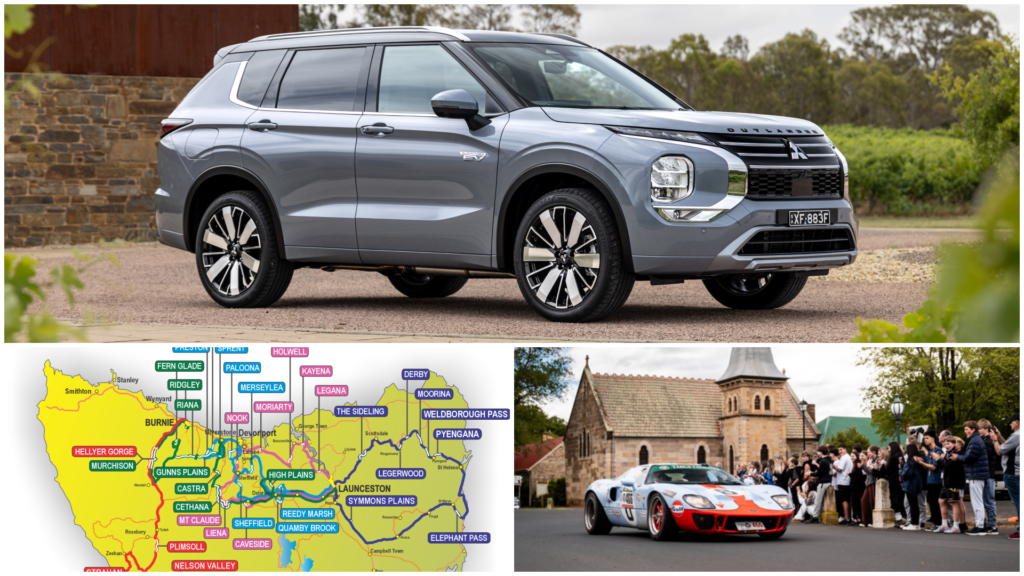
The programme previews Targa Tasmania’s return as described in the episode, including a five-day rally, a shorter Trofeo option, touring entries and changes to vehicle eligibility. David and Paul place those developments within the history of Australian tarmac rallies, recalling Adelaide events and the appeal of competition on closed public roads.
Safety remains central. They discuss the fatal crashes that prompted scrutiny of Targa, the hazards of roadside obstacles and the limits of protective equipment when speeds become very high. Paul draws on his competition experience to distinguish capable drivers from participants whose enthusiasm exceeds their skills.
That leads to a debate about driver training. Can a course build useful competence without encouraging overconfidence? Both stress the importance of understanding limitations, practising skills and anticipating danger. Emergency braking provides a concrete example of a capability drivers may rarely explore. Their discussion weighs sporting freedom against the responsibility to manage foreseeable risks.
Volkswagen ads, roads and Cybertruck
Feedback begins with appreciation for Brian Birch, the California art director sharing classic Volkswagen advertisements. David reports an enthusiastic response from Volkswagen Australia to the programme’s earlier discussion. A Kombi advertisement highlighting removable seats prompts further reflections on adaptable interiors, including the Kia Carnival and Renault 16.
The conversation then returns to potholes. Rather than stopping at calls for more repair funding, David highlights research discussed in a parliamentary inquiry into using crumb rubber from worn tyres in road construction. The attraction is twofold: potentially delaying cracking while finding a productive use for discarded material.
Finally, David and Paul revisit Cybertruck. They question whether reports about production at Tesla’s Texas factory necessarily mean the vehicle itself will disappear. Their comments remain speculative, considering commercial prospects, marketing value and the possibility of a gradual retreat. The exchange reinforces a recurring theme throughout the episode: headlines often conceal distinctions that deserve closer examination.
The imaginary Suzuki camper
An apparently luxurious little Suzuki recreational vehicle provides a lighter investigation of online imagery and wishful thinking. Paul explains that the pictures depict a compact camper with a bed across the vehicle, a kitchen, a toilet and a shower. Without people or familiar objects to establish scale, the interior initially appears more plausible than its dimensions would allow.
David and Paul enjoy the absurdity, comparing its improbable accommodation with the TARDIS and recalling the cramped realities of small caravans. The pink exterior adds another layer of fantasy, prompting suggestions that it belongs in a Barbie film or a children’s story about a magical family vehicle.
Behind the jokes is a useful observation about judging pictures online. Attractive presentation can obscure basic questions about size and practicality. The segment invites listeners to enjoy an imaginative concept while checking whether the physical space could possibly deliver everything the images appear to promise inside.
Mitsubishi Outlander PHEV road test
David’s Mitsubishi Outlander Exceed PHEV test explores the appeal and complications of combining battery driving with petrol backup. Regular overnight charging made urban use satisfying, while a motorway journey delivered an encouraging stretch without petrol consumption. The experience reinforced the value of keeping energy information visible as a reminder to plug in.
The discussion also shows why a single consumption figure tells an incomplete story. David distinguishes normal driving from deliberately using the petrol engine to recharge the battery. During a limited period in hilly conditions, that charging mode produced very high fuel consumption, which he treats as a consequence of the operating choice rather than a verdict on the whole vehicle.
Beyond efficiency, he appreciates the spacious cabin, mature driving feel and an accessible camera button that helps with parking preparation. David and Paul finish by discussing the purchase premium for plug-in capability and the importance of clear pricing information.
Credits
- David Brown — presenter and road tester.
- Paul Murrell, SeniorDriver.au — co-presenter and motoring commentator.
- Evan Jones — acknowledged for assistance with the programme.